
Name: Carnival - カーニバル
Year: 1971
Company: セガ (Sega)
Carnival is notable for the vertical bagatelle playfield in the backbox.


flyer scan available at The Internet Archive


from Japan Game Museum:
Carnival is notable for the vertical bagatelle playfield in the backbox.
flyer scan available at The Internet Archive
from Japan Game Museum:

The only image I've seen of Asteroid Killer so far is from this write-up in Play Meter 1979-12-15. The image shown above is the highest-resolution composite image, taken from the scan. (normally I limit images to 1200p)
 |
| Play Meter 1979-12-15 |
 |
| Play Meter 1979-12-15 |
The IPDB has this game as 1980, and it probably was released in 1980. But for this database we follow the methodology of tracking when a game first appears. So if it's shown in 1979, we're marking that down as 1979.
Another note is that I do not use any Japanese characters for the game. I do not use a Japanese title until I see it used by a primary source. I wonder if this machine was ever mentioned in Game Machine, and I missed it? I currently do not have any Japanese magazines from 1979-12 or early 1980s.

New Big Race appears in the 1973 game directory, which was printed in late 1972.
 |
| ニュービッグレース (New Big Race) in the machine directory |
TAN 91-4910 was registered by Sankyo in 1970. These numbers can potentially be re-used for similar machines for a 5 year period, but it does mean this machine is from no earlier than 1970. The 1972 print date of the machine directory is the only date we have, and the one we will use for the time being.
The following photos are provided by montagiyou. Thank you.


The following are photographs from the IPDB entry, and all by Jay Stafford. I believe this is the exact same machine as above.
 |
| Taito plate attached, I assume as a distributor. This is from before Taito changed their named in 1972. |
 |
| sparse backbox |

 |
| dramatically less circuity than we are familiar with in pinball machines |

The artwork bears a striking resemblance to Speed Racer Go Go...


 |
 |
| 1969 coin machine directory |
 |
| Mark III in 1972 Coin Machine Directory |
 |
| Mark II in 1972 Coin Machine Directory |
 |
| 1974/75 Machine Directory |
This interview mentions the new version, but refers to it as New Crazy 15. Or maybe I am translating it wrong and they mean it's a "new Crazy 15". As in, just a new version. New Crazy 15 was released years later.
From this interview:
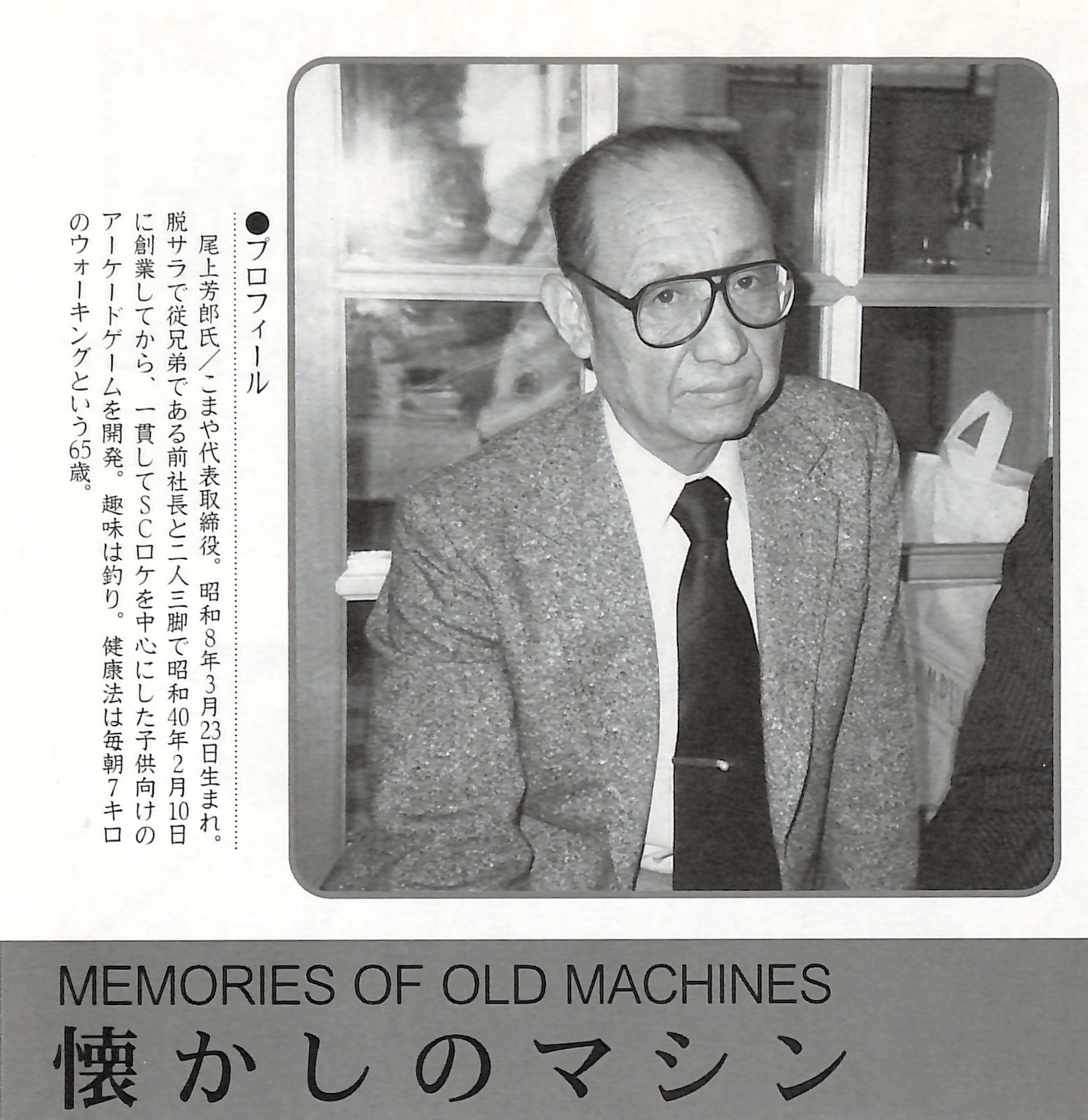

 |
| this article on Komaya has a quote saying that "New Crazy 15" was released in 1970 around the same time as Baseball, and both were a hit. But I am sure they mean this version of Crazy 15 since the proper "New Crazy 15" was released in 1977. |
Transcript:
あの頃、脱サラという言葉もまだあありませんでしたが、フリッパーの修理をしていた従兄弟に誘われて勤めていた会社を辞め、2人でゲームマシンを作ろうとスタートしたのが昭和35年でした。私自身、子供が好きだったのでそれに関わる仕事をしたかったのと、3歳という若さでしたから自分の力でできることを試してみたかったのです。よく遊園地へ行っては3時間、4時間と子供を観察しましたよ。ちっちゃい小学生が関西精機製作所の「ステレオトーキー」や「ミニドライブ」にとびついて夢中で遊んでいる姿を見て、どんな機械を作るにせよ子供を喜ばすにはそれなりの知識を持ってかからなくてはいけないと思いました。関西精機に追いつけ追い越せというのを目標に翌40年に会社を正式に設立して、最初に作ったのが「グーチョキパー」と「クレイジー15ゲーム」です。「グーチョキパー」は30台しか売れませんでしたが、「クレイジー15ゲーム」はよく出ました。日本万国博覧会が開かれた45年に音声入りの続編「ニュークレイジー15」を発売し、同時期にヒットした「ベースボール」と合わせて各3000台以上売れました。10年ぐらいはこれで食べていけましたね。当時はゲームコーナーに置く遊戯機械そのものがなかったから、ある程度のものを出したら売れるという環
Machine translation:
Back then, the term "quitting one's job" hadn't even been coined, but in 1960, my cousin, who repaired flippers, invited me to quit my job and we started making game machines together. I loved children, so I wanted to work in a job related to them, and I wanted to try something I could do on my own, since I was only three years old.I often went to amusement parks and spent three or four hours watching children. Seeing little elementary school kids jumping on Kansai Seiki Seisakusho's "Stereo Talkie" and "Mini Drive" and having fun playing with them, I realized that no matter what kind of machine I made, I had to have a certain amount of knowledge to make children happy.With the goal of catching up to and surpassing Kansai Seiki, I officially established the company the following year in 1965, and the first games I made were "Rock Paper Scissors" and "Crazy 15 Game".Only 30 units of "Rock Paper Scissors" were sold, but "Crazy 15 Game" was sold in large numbers. In 1970, when the Japan World Expo was held, they released a sequel with audio, "New Crazy 15," and together with "Baseball," which was a hit at the same time, they sold over 3,000 units of each.We were able to make a living with this for about 10 years. At the time, there were no game machines to put in the game corners, so if we released something of a certain quality, it would sell.

This is another extremely rare flyer shared by @area51_zek. (archive)
It appeared in the 1969 machine directory, but could be from an earlier year. I wish I had more information about Sankyo's early years. They released many wonderful machines in the 1960s, but there are very few references as to when they were made, or even the order in which the machines were released.
gameplay starts at 3:11 in this video:
This game can be spotted in the 5th Truck Guys movie... 度胸一番星
 |
| トラック野郎・度胸一番星 |
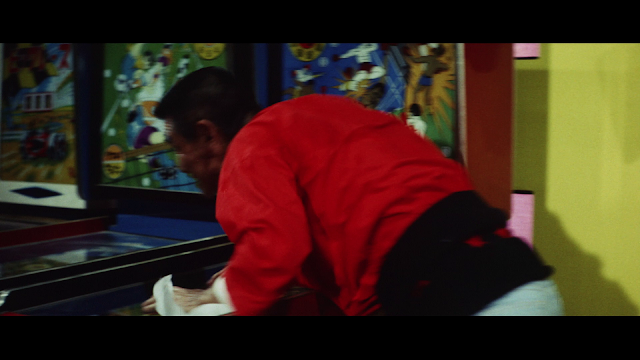 |
| Bunta is reeling, but on the far left you can see Big Race! |


I would like to argue that these machines from 日本娯楽機 (Nihon Gorakuki) were probably built in collaboration with 日本展望娯楽社 (Nihon Tenbo Entertainment Company) as well. Given the machine timeline we have currently assembled, I think it was one of the last machines built by 日本展望娯楽社 (Nihon Tenbo), or at least utilized their remaining parts.
There are two versions of this game, though they have many overlapping parts and artwork. I will explain the differences below.
First, I would like to express my gratitude to thank 日本ゲーム博物館H澤店長 / @naosunjer for preserving a copy of this machine, and generously sharing so much about it with the world. Nazox2016 has written about this machine as well.
These machines could not exist prior to 1971 as it references characters and images from 帰ってきたウルトラマン / Return of Ultraman, like Ultraman Jack, and the MAT logo (Monster Attack Team). I have not found any advertisements for these machines, but if they came out in 1971, we have very little material from that year to research from.
There are many things to discuss, so let's get started.
日本娯楽機製作所 (Japan Amusement Machine Manufacturing) was one of the first amusement machine manufacturing companies in Japan, publishing a famous catalogue around 1937. (see the Research Notes page for more details on that.) At first I did not think they were connected, but if we look at the company information for 日本娯楽機 (Nihon Gorakuki) from 1974, the representative is none other than amusement machine legend 遠藤嘉一 (Kaichi Endo)!
We do not see 日本娯楽機 (Nihon Gorakuki) in the back of the machine directories until 1974/75, where they are listed as making amusement vehicles.
 |
| 1974/1975 machine directory |
日本娯楽機 株式会社
代表者遠藤嘉一
所在地 東京都港区青山2-22-4 〒107
TEL 03(402) 7311~3
資本金 3,800万円
主な取引銀行 第一勧業(青山)・協和(赤坂)・太陽神戸(赤坂)
主な取引先 後楽園、松屋、東急百貨店、エスエス製薬他
営業種目 電動娯楽乗物機械の製造・販売。
Machine translation:
Nippon Entertainment Machine Co., Ltd.
Representative Yoshikazu Endo
Address: 2-22-4 Aoyama, Minato-ku, Tokyo 107
TEL 03(402) 7311~3
Capital 38 million yen
Main banks Daiichi Kangyo (Aoyama), Kyowa (Akasaka), Taiyo Kobe (Akasaka)
Main clients: Korakuen, Matsuya, Tokyu Department Store, SS Pharmaceutical, etc.
Business Line: Manufacture and sale of electric entertainment vehicle machines.
An advertisement for the 1972 game Ultraman Ace has even more proof that they are the same company. Beneath the Nihon Gorakuki logo "NGK" it says 創業50年 (50 years in business).
 |
| this is from an advertisement for 1972 ウルトラマンエース [Go! Go! ウルトラマンエ] (Ultraman Ace) by 日本娯楽機 (Nihon Gorakuki) & 三共 (Sankyo) |
While Ultraman Ace is listed as by Sankyo, I presume the NGK partnership is about licensing the Ultraman characters.
We see a number of rides and vending machines made by NGK in the 74/75 machine directory.
 |
| 1974/75 machine directory: machines listed as by 日本娯楽機 (Nihon Gorakuki) |
 |
| 1974/75 machine directory: machines listed as by 日本娯楽機 (Nihon Gorakuki) |
 |
| 1974/75 machine directory: machines listed as by 日本娯楽機 (Nihon Gorakuki) |
 |
| via 北原照久 facebook |
 |
| via 岐阜レトロミュージアム |
 |
| 1976 machine directory |
 |
| 日本娯楽機 (Nihon Gorakuki) advertisement from the 1978 machine directory |
 |
| 1978 machine directory |
The 1978 machine directory has an additional address and phone number, this one in Matsudo City phone # 0473 (41) 1281 and that matches the NGK sticker on the front of Ultra Attack. I have not seen this phone # or city referenced in other NGK flyers, but it does also appear in the 1979 and 1980 machine directories.
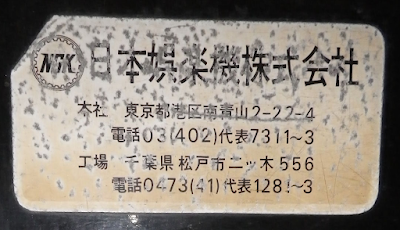 |
| sticker on the front of Ultra Attack with 日本娯楽機 (Nihon Gorakuki) contact information via IPDB |
 |
| 日本娯楽機 (Nihon Gorakuki) information from the 1979 machine directory |
 |
| 日本娯楽機 (Nihon Gorakuki) information from the 1980 machine directory |
There is no greater researcher of eremeka than Onitama-san. He released this video where he places the year "around 1972", so for the time being, I will stick with "~1972". My guess is that the sticker with the newer Nihon Gorakuki address was applied at a later time.
We have records of Nihon Tenbo machines existing from at least 1967, and up until 1972. There are mentions of 東急商事株式會社 (Tokyo Corporation) alongside some games, but they were acting as a distributor.
 |
| 日本娯楽機 (Nihon Gorakuki) use the "nt" logo on some machines. This is taken from the 1969 machine directory. |
本社・工場: 東京都練馬区早宮1-32-4 TEL991-4579(大代表)
大阪支店: 大阪市南区河原町1-1519 TEL大阪06(641)6074
第二工場: 東京都練馬区早宮1-49-3
埼玉営業所: 埼玉県川越市新富町2-6-1 丸広百貨店内
長野営業所:長野県諏訪郡下諏訪町萩倉 TEL諏訪局(7) 7827
And machine translated:
Head Office/Factory: 1-32-4 Hayamiya, Nerima-ku, Tokyo TEL991-4579 (main representative)
Osaka Branch: 1-1519 Kawaramachi, Minami-ku, Osaka TEL Osaka 06(641)6074
Second factory: 1-49-3 Hayamiya, Nerima-ku, Tokyo
Saitama Office: Inside Maruhiro Department Store, 2-6-1 Shintomicho, Kawagoe City, Saitama Prefecture
Nagano Office: Hagikura, Shimosuwa-machi, Suwa-gun, Nagano Prefecture TEL Suwa Bureau (7) 7827
In addition to "nt", they use the brand Nitten on some products:
 |
| it's hard to read, but I think that says Nitten |
 |
| 1969 Socker Ace - サッカーエース (Soccer Ace) by 日本展望娯楽社 (Nihon Tenbo Entertainment Company — Nitten) |
 |
| 1970 ビート & スパーク (Beat & Spark) [Socker] by 東急商事株式會社 (Tokyo Corporation) & 日本展望娯楽社 (Nihon Tenbo) |
 |
| 1970 ジャンボ キック (Jumbo Kick) by 東急商事株式會社 (Tokyo Corporation) & 日本展望娯楽社 (Nihon Tenbo) |
 |
| 1971 Socker - サッカー (Soccer) by 日本展望娯楽社 (Nihon Tenbo Entertainment Company — Nitten) |
Lucky for us, Jay Stafford of IPDB has documented many angles of this machine.
 |
| via IPDB |
 |
| via IPDB |
 |
| ビート & スパーク (Beat & Spark) [Socker] by 東急商事株式會社 (Tokyo Corporation) & 日本展望娯楽社 (Nihon Tenbo) control panel and playfield detail |
 |
| playfield detail via IPDB ウルトラアタック (Ultra Attack) by 日本娯楽機 (Nihon Gorakuki) & 日本展望娯楽社 (Nihon Tenbo) [presumed] |
This post is for two games. At first glance, you might think it is an alternative backglass, but none of the display lamps line up. This would require a separate design for the backbox wiring. (the playfields also have slight differences, but more on that later)
So let's go back to Ultra Attack and compare backboxes to Beat & Spark:
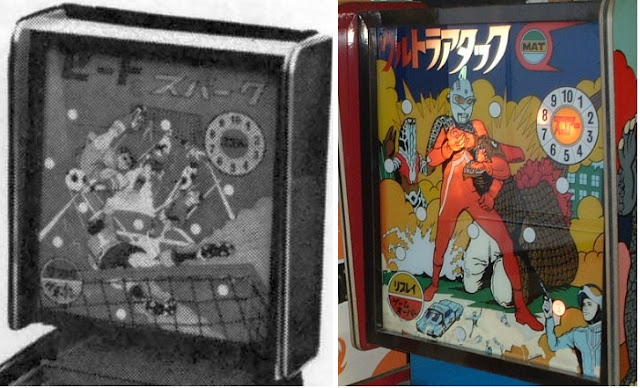 |
| all of the lamps are in the exact same position. |
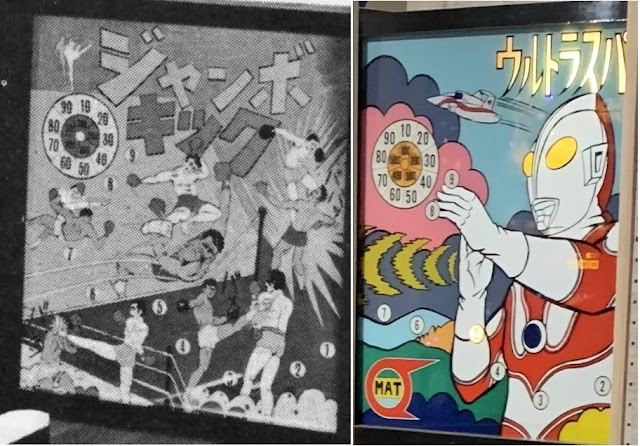 |
| all of the lamps are in the exact same position. |
When we compare the playfields and controls, we see that Ultra Attack is a Jumbo Kick with new artwork.
 |
| 1970 ジャンボ キック (Jumbo Kick) by 東急商事株式會社 (Tokyo Corporation) & 日本展望娯楽社 (Nihon Tenbo) detail of control panel and playfield |
 |
| playfield from Ultra Spark |
 |
| controls from Ultra Spark |
This is why I have added "日本展望娯楽社 (Nihon Tenbo) [presumed]" for the companies for Ultra Attack.
I only have a glimpse of it, but I want to note that Ultra Spark uses the same side cabinet art as the other model.
 |
| side art of Ultra Spark |
eremeka search tool // エレメカ検索ツール begin browsing at the beginning / 最初から閲覧を開始する begin browsing at 1960 / 1960年代から閲覧する begin browsing at 1970...

